
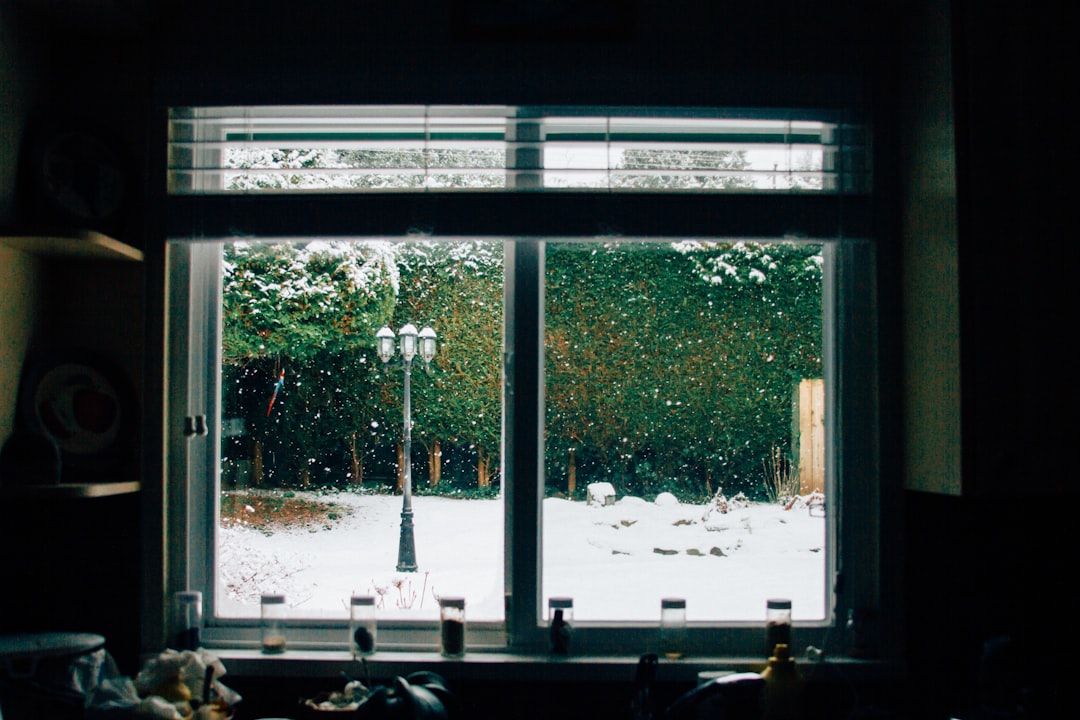
Your windows: the weak link in your home's insulation
According to Hydro-Québec, up to 25% of a home's heat loss comes from windows and French doors. Even in a well-insulated house (R-24 walls, R-60 attic), windows often provide a thermal resistance of only R-2 to R-4 — that's 6 to 12 times less than the walls. Improving your window insulation is therefore one of the most rewarding steps you can take to reduce your heating bill.
Diagnosis: where to start?
Identify your problem windows
Not all windows contribute equally to heat loss. Start with the ones that:
- Show condensation or frost on the interior face in winter.
- Let drafts through (test with an incense stick along the joints).
- Have a fogged thermos (sealed glass unit) between the panes — a sign that the seal is broken and the insulation is compromised.
- Face north or west — the most exposed to cold and prevailing wind.
- Are large — the bigger the glass surface, the greater the losses.
The solutions, from least to most expensive
1. Heat-shrink film (a few dollars per window)
This budget-friendly solution involves applying a clear plastic film to the interior window frame, which creates an extra insulating air layer. Once shrunk with a hair dryer, the film is nearly invisible. It's a temporary fix, useful for windows you don't plan to repair right away.
2. Weatherstripping replacement ($30 to $80 per window)
Worn or crushed weatherstripping lets drafts through continuously. Replacing it is quick and resolves a good share of the air infiltration around operating sashes. According to Hydro-Québec, air leaks and ventilation can account for up to 25% of a home's heat loss.
3. Professional caulking ($8 to $20 per linear foot)
Caulking fills the gaps between the window frame and the wall. It blocks cold air and, above all, water. Our complete caulking guide explains the products and the method.
4. Replacing failed thermos units ($149 to $400 per installed unit)
Replacing failed sealed units restores the window's original insulation. A new thermos with a Low-E coating and argon gas insulates far better than an old thermos whose seal is broken or whose gas has escaped, and the frame stays in place.
5. Cellular shades
Cellular shades (also called honeycomb shades) trap air in their cells and form an insulating barrier when closed. They're especially useful at night.
6. Full window replacement (often $800 to $1,500 per window)
When the frames are damaged or the windows are very old (single glazing, rotten wood frames), full replacement is the only solution. Choose ENERGY STAR certified windows: the Rénoclimat program then grants $150 per opening. The conditions are in our article on grants.
Recommended action plan
Here's the order we recommend, from least to most expensive:
- Step 1 (right away): replace worn weatherstripping and redo deficient caulking.
- Step 2 (short term): replace failed thermos units, starting with the largest ones.
- Step 3 (medium term): add cellular shades to the most exposed windows.
- Step 4 (long term): fully replace windows whose frames are at the end of their life.
What Vosthermos can do
At Vosthermos, we handle steps 1 and 2: weatherstripping, caulking and thermos replacement. These are the jobs that cost the least for the insulation they restore.
Check our prices for an estimate, visit our shop for parts, or contact us for a free evaluation of your windows.