
The signs that don't lie
Your windows play an essential role in your home's comfort, especially in Quebec where temperature swings between winter and summer can exceed 60 degrees. Thermos (sealed glass unit) panes, also called sealed units or insulating glass units, are designed to last between 15 and 25 years. But how do you know when they're reaching the end of their life?
The first and most obvious sign is fog between the two panes. If you see condensation appearing inside the sealed unit, the seal has failed and the insulating gas (often argon) has escaped. This fog can't be cleaned off because it sits between the glass panels. At first, it may only show up during significant temperature changes, but over time it becomes permanent and can even leave whitish mineral deposits on the glass.
Interior vs. exterior condensation: what's the difference?
It's important to distinguish condensation that forms inside your home (on the room-side glass surface) from condensation that forms between the panes. Condensation on the interior surface can be caused by humidity levels that are too high in the house, especially in winter when you're running a humidifier. That doesn't necessarily mean your thermos is defective.
On the other hand, condensation between the two glass panels clearly indicates a broken seal. It's the most reliable sign that your sealed unit needs to be replaced. If you're not sure, run your finger over the glass: if the fog doesn't wipe away, it's inside the unit.
Drafts near your windows
Another common indicator is a cold feeling near your windows, even when they're fully closed. A thermos with a compromised seal loses its insulating properties. The argon gas that filled the space between the two panes is replaced by humid air, which considerably reduces the window's insulating value.
To test it, hold your hand near the interior surface of the glass on a cold day. If you feel a noticeable chill compared to other windows in the house, that's a sign the thermos is no longer doing its job. An infrared thermometer can also help you measure surface temperature and compare windows.
Other visual signs to watch for
- Visual distortion: when you look through the glass, straight lines appear wavy. This can indicate that the glass has deformed under atmospheric pressure after the interior gas was lost.
- Whitish or milky deposits: permanent mineral traces between the panes, caused by condensation repeatedly evaporating.
- Cracks or chips: even a small crack in the glass compromises the integrity of the sealed unit.
- Visibly degraded black seal: if the black sealant between the two panes looks cracked, detached or crumbling, the unit is at the end of its life.
Repair or replace?
The question comes up often: can a fogged thermos be repaired? There are two solutions, and we offer both. Defogging removes the moisture trapped between the panes and restores clarity for less ($80 to $175 per window). It's best suited to recent fog on a thermos that's still young, but it doesn't put the original insulating gas back: the glass becomes clear again, not more insulating.
The longer-lasting solution is replacing the sealed unit ($149 to $400 per installed unit, 10 years warranty). The good news is that it's generally not necessary to replace the entire window. A qualified technician can remove just the thermos and install a new one in the existing frame. It's a far less expensive job than a full window replacement.
The impact on your energy bill
A thermos with a failed seal insulates less well: the glass is colder and the heating system compensates. According to Hydro-Québec, up to 25% of a home's heat loss is attributable to windows and French doors. In Quebec, where the heating season lasts 6 to 8 months, windows in good condition count for a lot in both comfort and cost.
When should you act?
Ideally, have your windows inspected before the fall so the work is completed before the deep cold arrives. Manufacturing a custom thermos generally takes 2 to 3 weeks. Fall and early winter are the busiest periods, so plan accordingly.
If your windows are more than 15 years old, a preventive inspection is recommended even if there are no visible symptoms. Problems can start subtly and get worse quickly during an intense cold snap.
How does the replacement work?
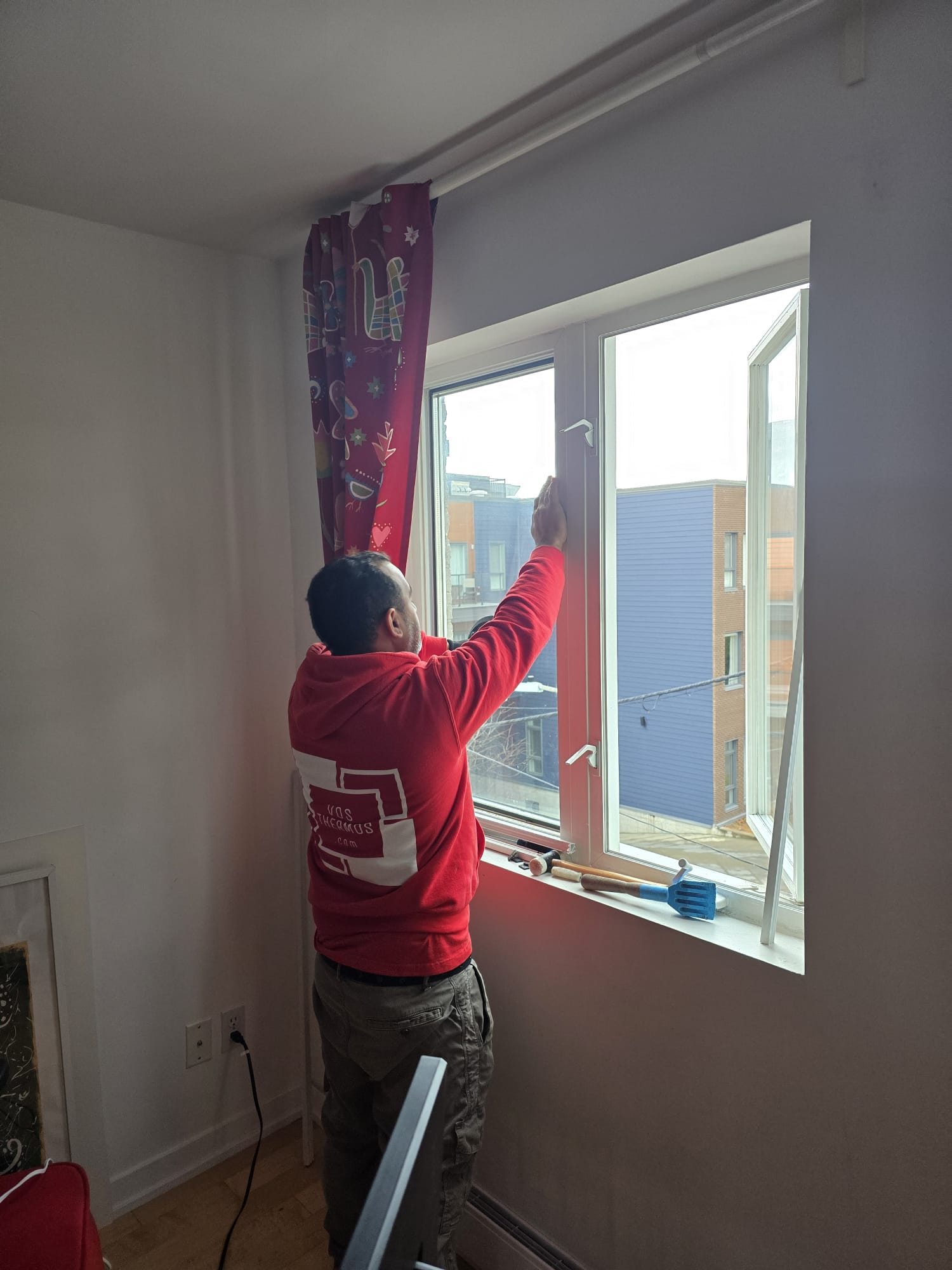
The process is simple and quick. A technician comes out to take exact measurements of each unit to be replaced. The thermos is custom-made, then installed in less than an hour per window. There's generally no need to touch the window frame, the exterior siding or the interior finish. It's a clean job done from the inside.
At Vosthermos, we serve Montreal, the South Shore and surrounding areas. Our technicians are experienced and install thermos units made in Quebec, backed by a 10 years warranty. If you notice one or more of the signs described in this article, don't hesitate to contact us for a free assessment.
Need an inspection or a quote? Call us at 514-825-8411 or fill out our online form for a free estimate. Our experts will be glad to advise you.